

Your Neighborhood trusted CONTRACTOR
THE COMPLETE GUIDE TO DRAINAGE & YARD DRAIN SYSTEMS IN SAN DIEGO
Protect Your Home, Landscape, and Investment with Proper Drainage Solutions
Water is one of the most destructive forces affecting residential landscapes. While San Diego is known for its dry climate, heavy winter storms, irrigation leaks, overwatering, and improper grading can quickly lead to standing water, erosion, damaged hardscape, failing retaining walls, dying plants, and even foundation problems.
A properly designed drainage system protects your property by directing water away from your home while preserving the beauty and longevity of your landscape. Whether you're installing a new patio, building a retaining wall, renovating your backyard, or simply trying to eliminate muddy areas, drainage should always be part of the design—not an afterthought.
At Nature's Elements Landscaping, we design drainage systems that work seamlessly with your landscape, hardscape, irrigation, and outdoor living spaces. Our goal is to solve water problems before they become expensive repairs, giving you an outdoor environment that's beautiful, functional, and built to perform for years to come.
Request a Quote • Call Now • Text Us • Email Us
Why Drainage Matters More Than Most Homeowners Realize
Most homeowners don't think about drainage until they notice puddles after a rainstorm or water running toward their home's foundation. Unfortunately, by that point, water may have already begun damaging soil, concrete, retaining walls, or planting areas.
Proper drainage is one of the most important components of any successful landscape project. It protects your investment by controlling how water moves across your property and preventing problems before they occur.
A professionally designed drainage system can help:
Eliminate standing water
Prevent soil erosion
Protect your home's foundation
Reduce hydrostatic pressure behind retaining walls
Extend the life of patios, walkways, and driveways
Prevent muddy lawns and planting beds
Improve plant health
Reduce mosquito breeding areas
Protect synthetic turf installations
Keep outdoor living spaces usable year-round
The best drainage systems are often the ones you never notice because they're working beneath the surface every day.
Common Signs Your Property Has a Drainage Problem
Drainage issues don't always appear as large puddles or flooding. Many problems develop slowly over time and become more expensive to repair if they're ignored. Identifying the warning signs early can help prevent damage to your landscape, hardscape, and even your home's foundation.
You may have a drainage problem if you notice:
Water pooling in your lawn after rain or irrigation
Standing water that remains for more than 24 hours
Soil erosion or mulch washing away
Water running toward your home's foundation
Wet or muddy areas that never seem to dry out
Dead or unhealthy plants caused by saturated soil
Concrete patios or walkways settling unevenly
Pavers sinking or shifting over time
Water collecting against retaining walls
Staining or algae growing on concrete surfaces
Excessive runoff from neighboring properties
Irrigation overspray creating constantly wet areas
Gutters or downspouts dumping water near the foundation
Mosquitoes breeding in standing water
Slippery walkways caused by poor drainage
Many homeowners assume these issues are normal or simply part of having a yard. In reality, they often indicate that water is not being properly collected, redirected, or absorbed. The good news is that most drainage problems can be corrected with the right combination of grading, drainage systems, and proper landscape design.
At Nature's Elements Landscaping, we begin every drainage project by identifying the source of the problem rather than simply treating the symptoms. By understanding how water naturally moves across your property, we can design a long-term solution that protects your investment while enhancing the overall appearance of your landscape.
Understanding How Water Moves Across Your Property
Every property has a natural drainage pattern. During a rainstorm or irrigation cycle, water follows the path of least resistance, flowing downhill until it either soaks into the soil or reaches a collection point. When that natural flow is interrupted by poor grading, hardscape, compacted soil, or construction, water begins collecting where it shouldn't.
A properly designed landscape works with the natural contours of your property rather than against them. The goal is to collect, redirect, slow, or disperse water before it causes damage.
Several factors influence how water drains on your property, including:
The slope and elevation of your yard
Soil type and how quickly it absorbs water
Existing retaining walls and planter beds
Concrete, pavers, and other hardscape surfaces
Roof runoff from gutters and downspouts
Irrigation system design and watering schedules
Neighboring properties and shared drainage patterns
Local stormwater flow during heavy rain events
Many drainage problems are caused by multiple issues working together. For example, a backyard may have compacted clay soil, improper grading, and an oversized irrigation system. Solving only one of those issues may provide temporary relief, but a complete drainage solution addresses the entire property as one integrated system.
This is why drainage planning should always occur before installing patios, retaining walls, synthetic turf, planting, or irrigation. Designing drainage first helps ensure every part of your landscape works together to move water safely away from structures while protecting your outdoor investment.
At Nature's Elements Landscaping, we evaluate each property's unique drainage patterns before recommending a solution. By combining proper grading with proven drainage techniques, we create landscapes that perform as well as they look.
Types of Yard Drainage Systems
No single drainage solution works for every property. The right system depends on your soil conditions, grading, hardscape, existing landscaping, and where the water needs to go. In many cases, the most effective solution combines several drainage methods into one complete system.
French Drains
French drains are one of the most effective ways to capture underground water and redirect it away from problem areas. A perforated drain pipe is installed within a gravel-filled trench, allowing groundwater to enter the pipe and flow safely to a designated discharge location.
French drains are commonly used to:
Eliminate soggy lawns
Reduce water around foundations
Relieve hydrostatic pressure behind retaining walls
Improve drainage in planter beds
Dry out low-lying areas
Catch Basins
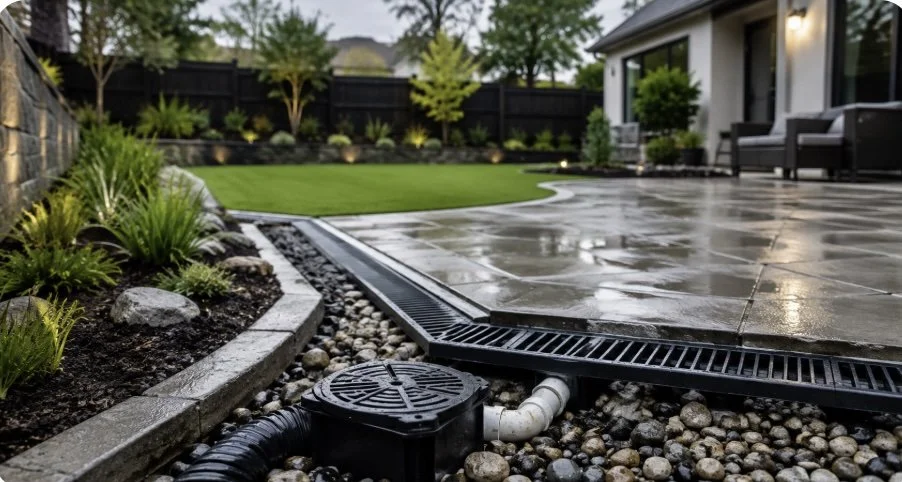
Catch basins collect surface water before it has a chance to flood patios, walkways, driveways, or planting areas. Water enters through a grated inlet and flows into an underground drainage pipe that carries it away from the property.
Catch basins are ideal for:
Low spots in yards
Patio drainage
Driveways
Pool decks
Areas where water naturally collects
Channel Drains
Also known as trench drains, channel drains are long, narrow drains typically installed across patios, driveways, garage entrances, and walkways. They intercept sheet flow before water reaches structures or creates slippery surfaces.
Channel drains are commonly installed:
Along patio edges
In front of garage doors
Across driveways
Around pool decks
Adjacent to outdoor kitchens
Area Drains
Area drains are designed to collect water from relatively flat sections of a landscape where runoff cannot naturally escape. They are often connected to solid underground drain pipe that carries water to a safe discharge point.
Downspout Drainage
Roof runoff can discharge hundreds of gallons of water during a single storm. Connecting downspouts to underground drain lines prevents water from collecting around foundations, planting beds, and walkways while reducing erosion near the home.
Dry Wells
When storm drains or street connections are not practical, a dry well allows water to slowly infiltrate into the surrounding soil below ground. Dry wells are often paired with French drains or catch basins to manage excess runoff efficiently.
Swales & Bioswales
A swale is a shallow, gently sloped channel that directs water naturally across a property without relying on underground piping. When planted with appropriate vegetation, bioswales also help filter runoff while reducing erosion and improving drainage.
Proper Site Grading
Sometimes the most effective drainage solution isn't another drain—it's correcting the grade of the property. Small adjustments to the slope can significantly improve how water flows, often eliminating standing water before it becomes a problem.
Proper grading is the foundation of every successful drainage system. Drains should enhance good grading, not compensate for poor grading.
Most residential properties benefit from a combination of these drainage methods working together. At Nature's Elements Landscaping, we design complete drainage systems tailored to your property, ensuring water is managed safely, efficiently, and with long-term performance in mind.
Choosing the Right Drainage Solution for Your Property
Every drainage problem has a different cause, which means there is no one-size-fits-all solution. Installing the wrong type of drain may temporarily move water, but it won't solve the underlying issue. The best drainage systems begin with understanding where the water comes from, how it travels across your property, and where it can be safely discharged.
Here's how we typically match drainage solutions to common problems:
ProblemRecommended SolutionStanding water in the lawnFrench drain, grading improvements, catch basinWater collecting on patiosChannel drain, catch basin, surface gradingWater against the home's foundationFoundation drainage, French drain, downspout extensionsWater behind retaining wallsGravel backfill, perforated drain pipe, weep systemDriveway floodingChannel drain, catch basin, grading improvementsPool deck drainageChannel drains, area drainsHillside erosionSwales, grading, retaining walls, drainage pipeOverflowing downspoutsUnderground drain lines connected to downspoutsSynthetic turf holding waterProper subgrade preparation, drainage rock, perforated drains when necessaryWater flowing from neighboring propertiesDiversion swales, retaining walls, catch basins, grading solutions
During a professional drainage evaluation, we look at much more than just the wet area. We evaluate:
Existing elevations and slope
Soil conditions
Roof drainage
Irrigation coverage
Hardscape runoff
Retaining wall construction
Planting areas
Utility locations
Available discharge points
Local drainage requirements
Our goal isn't simply to remove water—it's to manage it responsibly while protecting your home, preserving your landscape, and extending the life of every outdoor improvement.
By designing the entire property as one integrated drainage system, we help prevent recurring problems and costly future repairs while creating an outdoor space that performs just as well during a storm as it does on a sunny day.
Drainage Solutions We Install
At Nature's Elements Landscaping, we design and install complete drainage systems that are tailored to the unique conditions of your property. Whether you're dealing with a small area of standing water or a complex drainage issue affecting multiple parts of your landscape, we build systems designed for long-term performance—not temporary fixes.
Our drainage services include:
French Drain Systems
French drains are ideal for collecting subsurface water and preventing saturated soil. We install properly sloped perforated drain pipe surrounded by clean drainage rock and wrapped with geotextile fabric when appropriate to reduce sediment buildup and extend the life of the system.
Catch Basins & Area Drains
Catch basins collect surface runoff before it reaches your home, patio, driveway, or planting beds. They are strategically placed in low areas where water naturally accumulates and connected to underground drain lines for efficient water removal.
Channel (Trench) Drains
Channel drains are commonly installed across driveways, patios, pool decks, garage entrances, and walkways to intercept sheet flow and prevent water from crossing finished surfaces.
Solid & Perforated Drain Pipe Installation
We install both solid and perforated drain pipe depending on the application. Solid pipe transports collected water to a discharge location, while perforated pipe collects groundwater beneath the surface.
Retaining Wall Drainage
Every retaining wall should include a properly designed drainage system to reduce hydrostatic pressure behind the wall. Depending on the wall design, this may include drainage rock, perforated pipe, filter fabric, drainage outlets, and weep systems to help protect the wall from premature failure.
Downspout Drainage
Roof runoff is often overlooked but can contribute significantly to drainage problems. We connect downspouts to underground drain systems that safely transport water away from foundations, walkways, patios, and landscape beds.
Dry Wells & Infiltration Systems
Where appropriate, dry wells provide a place for collected water to gradually soak back into the soil. These systems are particularly useful on properties where connecting to an approved discharge point isn't practical.
Grading & Drainage Corrections
Many drainage problems can be improved through proper grading. We reshape the landscape where necessary to encourage positive drainage while maintaining a natural appearance and protecting existing improvements whenever possible.
Drainage for Hardscape Projects
Every patio, driveway, walkway, outdoor kitchen, and pool deck should be designed with drainage in mind. We integrate drainage systems into our hardscape projects so water is managed before the finished surfaces are installed.
Drainage for Synthetic Turf
Synthetic turf requires proper drainage beneath the surface to perform correctly. We prepare the base, install the appropriate aggregate materials, and incorporate additional drainage systems when site conditions require them.
No two properties drain exactly the same. That's why every drainage system we install is customized to your property's grading, soil conditions, existing improvements, and long-term landscape goals. Our objective is to provide solutions that not only eliminate water problems today but continue protecting your investment for years to come.
Professional Drainage Materials & Installation Methods
Not all drainage systems are built the same. While many drainage problems can be solved with similar-looking components, the quality of the materials, proper installation techniques, and attention to detail often determine whether the system performs well for decades—or begins failing after just a few seasons.
At Nature's Elements Landscaping, we believe every drainage system should be designed for long-term performance using proven construction methods and professional-grade materials. We don't simply install a drain; we build a complete water management system designed to protect your home, landscape, and outdoor investment.
Professional Drain Pipe Selection
Different drainage situations require different types of pipe.
Solid Drain Pipe
Solid pipe is used to transport collected water from one location to another without allowing additional water to enter the system. It's commonly installed after catch basins, channel drains, and downspouts to safely discharge water away from the property.
Perforated Drain Pipe
Perforated pipe is designed to collect groundwater below the surface. Thousands of small openings allow water to enter the pipe while surrounding drainage rock helps relieve saturated soil and hydrostatic pressure.
Selecting the proper pipe for each application is essential to building a drainage system that performs as intended.
Drainage Rock & Aggregate
Drainage rock plays a critical role in allowing water to move freely toward the drainage pipe while reducing soil saturation.
Properly sized, clean aggregate helps:
Improve water movement
Reduce hydrostatic pressure
Increase drainage capacity
Protect surrounding soil
Improve long-term system performance
Using the wrong material—or allowing soil to mix with the drainage rock—can significantly reduce a system's effectiveness over time.
Geotextile Filter Fabric
In many drainage applications, we install geotextile filter fabric to help separate soil from drainage aggregate.
This fabric helps:
Reduce sediment entering the drainage system
Extend the life of perforated drain pipe
Minimize clogging
Maintain proper water flow
Improve long-term reliability
The appropriate use of filter fabric depends on soil conditions, drainage design, and the specific application.
Catch Basins, Channel Drains & Surface Collection
Capturing water before it creates problems is just as important as moving it away.
Professionally installed surface drainage components help collect runoff from:
Patios
Walkways
Driveways
Pool decks
Side yards
Courtyards
Low-lying landscape areas
Proper placement, sizing, and grading ensure these systems collect water efficiently while blending naturally into the surrounding landscape.
Proper Pipe Slope Matters
Even the highest-quality materials won't perform properly if they're installed incorrectly.
Drain pipes must maintain consistent slope throughout the system to allow water to flow efficiently toward the discharge point. Pipe that's too flat may allow water to stagnate, while excessive slope can reduce drainage efficiency and contribute to erosion at the outlet.
Professional installation ensures every component works together as one complete drainage system.
Built for Long-Term Performance
A drainage system should continue protecting your property year after year—not just during the first rainy season.
That's why we focus on proper grading, quality materials, careful installation, and complete system integration. Whether we're installing drainage as part of a backyard renovation, retaining wall, synthetic turf installation, or correcting an existing drainage problem, our goal is to deliver a solution that's durable, dependable, and built to perform for decades.
By combining proven construction methods with thoughtful landscape design, we create drainage systems that homeowners rarely notice—because they're working exactly as they should.
Why Proper Drainage Should Be Part of Every Landscape Project
Drainage isn't a separate project—it's a critical component of a well-designed landscape. Whether you're installing a new patio, retaining wall, outdoor kitchen, synthetic turf, or planting, every improvement should be planned with water management in mind.
Unfortunately, many drainage problems develop because water wasn't considered during the original design or construction. Correcting those issues after the project is complete is often more expensive than incorporating drainage from the beginning.
At Nature's Elements Landscaping, we integrate drainage into every phase of the design and construction process to help protect your investment and maximize the lifespan of your outdoor improvements.
Drainage & Hardscape
Patios, driveways, walkways, and pool decks should be constructed with proper slope to direct water away from structures and toward designated drainage systems. We also incorporate channel drains and catch basins where necessary to manage surface runoff without affecting the appearance of the finished project.
Drainage & Retaining Walls
Retaining walls must manage both the weight of the soil and the water behind them. Without proper drainage, hydrostatic pressure can build up over time, increasing the risk of cracking, leaning, or structural failure.
Our retaining wall systems are designed with drainage rock, perforated drain pipe, filter fabric, and appropriate drainage outlets to help relieve water pressure and promote long-term stability.
Drainage & Irrigation
An efficient irrigation system and a properly designed drainage system work together. Overwatering, broken sprinkler heads, leaking valves, or poor irrigation design can create drainage problems that mimic grading issues.
By evaluating both systems together, we help ensure water is applied only where it's needed and excess runoff is minimized.
Drainage & Synthetic Turf
Synthetic turf drains exceptionally well when installed over a properly prepared base. In areas with heavy runoff or poor soil conditions, we may recommend additional drainage features beneath the turf to prevent water from collecting below the surface.
Drainage & Plant Health
Healthy plants require well-drained soil. Too much water can suffocate roots, encourage fungal diseases, and shorten the lifespan of trees, shrubs, and groundcovers. Proper drainage helps maintain balanced soil moisture, allowing plants to thrive while reducing water waste.
Designing for Long-Term Performance
Every landscape should be designed as a complete system where grading, drainage, irrigation, hardscape, and planting work together. Taking this comprehensive approach helps prevent future repairs, reduces maintenance, and ensures your landscape continues to perform beautifully through every season.
By considering drainage from the very beginning, homeowners can enjoy an outdoor space that not only looks exceptional but also functions exactly as it should for many years to come.
Our Drainage Design Process
Every successful drainage system begins with understanding how water behaves on your property. Rather than recommending a one-size-fits-all solution, we evaluate the entire landscape to identify the source of the problem and develop a plan that works with your home's existing conditions.
Our drainage design process typically includes:
Property Evaluation
We begin by walking the property to identify low areas, drainage patterns, irrigation concerns, roof runoff, hardscape elevations, retaining walls, and any signs of erosion or standing water.
Identifying the Source
Water problems are often symptoms of a larger issue. We determine whether the problem is caused by improper grading, irrigation, roof drainage, neighboring runoff, compacted soil, or a combination of factors.
Designing the Solution
Based on our evaluation, we recommend the most effective combination of grading improvements, French drains, catch basins, channel drains, downspout connections, retaining wall drainage, or other water management systems.
Professional Installation
Our team installs each drainage system with careful attention to grading, pipe slope, proper materials, and long-term durability. Every component is designed to work together as part of a complete drainage system.
Final Testing & Inspection
Before completing the project, we verify that water flows properly through the system and that all drainage components function as intended. Our goal is to ensure your landscape performs just as well during the next storm as it does on a sunny day.
By taking a comprehensive approach to drainage design and installation, we help homeowners protect their property, reduce future maintenance, and enjoy an outdoor space that's built to last.
How Much Does a Drainage System Cost?
One of the most common questions homeowners ask is, "How much will it cost to fix my drainage problem?" The answer depends on the cause of the issue and the type of solution your property requires.
Every landscape is different, and effective drainage systems are designed around your property's grading, soil conditions, existing hardscape, and where water can be safely discharged. Because of these variables, there isn't a one-size-fits-all price for drainage improvements.
Several factors influence the overall cost of a drainage project, including:
The size of the area requiring drainage
The severity of the drainage problem
Existing grading and site conditions
Soil type and excavation requirements
The type of drainage system being installed
Access for equipment and materials
Existing patios, retaining walls, or utilities
Where the collected water will be discharged
Whether drainage is being installed as part of a larger landscape renovation
In many cases, incorporating drainage during a new landscape installation is more cost-effective than adding it after patios, retaining walls, planting, or synthetic turf have already been completed.
At Nature's Elements Landscaping, we begin every drainage project with a thorough site evaluation so we can recommend the most effective solution for your property. Our goal is to solve the problem correctly the first time, helping you avoid costly repairs and unnecessary maintenance in the future.
Maintaining Your Drainage System
A professionally installed drainage system requires very little maintenance, but periodic inspections help ensure it continues to perform as designed for many years.
Leaves, mulch, soil, and other debris can gradually accumulate around drain inlets or inside catch basins, reducing the system's ability to move water efficiently. Regular maintenance helps prevent small issues from becoming larger drainage problems.
We recommend homeowners periodically:
Remove leaves and debris from catch basin grates.
Inspect channel drains to ensure water can flow freely.
Keep drainage outlets free of vegetation and obstructions.
Avoid covering drain inlets with mulch, decorative rock, or landscape fabric.
Check downspouts after major storms to verify water is flowing properly.
Monitor areas that have experienced erosion or settling.
Inspect retaining wall drainage outlets for proper flow.
Evaluate irrigation systems to prevent overwatering that can mimic drainage problems.
If you notice standing water, erosion, slow-draining catch basins, or unusually wet areas after rainfall or irrigation, it's a good idea to have your drainage system professionally inspected before the problem worsens.
With occasional maintenance and proper care, a well-designed drainage system can protect your home, hardscape, retaining walls, planting, and outdoor living spaces for decades.
Common Drainage Mistakes That Can Lead to Costly Repairs
Many drainage problems aren't caused by heavy rain—they're caused by poor planning or improper installation. Unfortunately, homeowners often don't realize there's a problem until they notice standing water, erosion, settling hardscape, or damage to their landscape.
Avoiding these common mistakes can save thousands of dollars in future repairs.
Installing Drains Without Correcting the Grade
A drain cannot compensate for improper grading. If water naturally flows toward your home or collects in low areas, simply adding a drain may not solve the problem. Proper grading is the foundation of every successful drainage system.
Using the Wrong Type of Drain
Different drainage problems require different solutions. Installing a French drain where a channel drain is needed—or vice versa—can result in poor performance and recurring water issues.
Improper Pipe Slope
Underground drain pipes must maintain adequate slope to move water efficiently. Pipes that are too flat may allow water to sit inside the system, while excessive slope can reduce performance and create erosion at the discharge point.
Failing to Install Retaining Wall Drainage
Retaining walls require proper drainage behind the wall to relieve hydrostatic pressure. Omitting drainage rock, perforated pipe, or filter fabric can significantly shorten the life of the wall and increase the risk of structural failure.
Connecting Drainage to the Wrong Location
Every drainage system needs a safe and appropriate discharge point. Water should never be redirected toward neighboring properties, foundations, or areas where it creates new drainage problems.
Ignoring Roof Runoff
During heavy rain, a single roof can produce hundreds of gallons of water in a short period of time. Downspouts that discharge next to the foundation or into planting beds often contribute to erosion, saturated soil, and standing water if they aren't properly connected to a drainage system.
Overwatering the Landscape
Not every wet area is caused by rain. Broken sprinkler heads, leaking irrigation valves, or excessive watering schedules frequently create drainage issues that can be corrected by improving irrigation efficiency.
Waiting Too Long to Address the Problem
Small drainage issues rarely improve on their own. Standing water, erosion, and saturated soil often become more severe over time, leading to damaged hardscape, unhealthy plants, and more expensive repairs.
At Nature's Elements Landscaping, we take a comprehensive approach to drainage by evaluating grading, irrigation, hardscape, soil conditions, and existing drainage patterns before recommending a solution. Our goal is to correct the source of the problem—not simply manage the symptoms.
Why Professional Drainage Design Saves Money
Many homeowners don't think about drainage until they see standing water, erosion, or damage to their landscape. Unfortunately, by the time these problems become visible, water may have already affected retaining walls, foundations, patios, planting areas, or irrigation systems.
A professionally designed drainage system isn't simply about removing water—it's about preventing expensive repairs before they happen. By understanding how water moves across your property and designing every landscape improvement to work together, drainage becomes an investment in the long-term health of your home.
Professional drainage planning can help homeowners avoid:
Premature hardscape settlement
Retaining wall failures
Soil erosion
Foundation moisture issues
Plant loss caused by saturated soil
Irrigation-related drainage problems
Costly landscape repairs
Repeat drainage work that doesn't solve the underlying problem
At Nature's Elements Landscaping, we believe every drainage system should be designed with the future in mind. Our goal isn't simply to fix today's water problem—it's to create a landscape that continues performing properly for years to come.
Why Homeowners Throughout San Diego Choose Nature's Elements Landscaping
A drainage system is only as effective as the planning behind it. At Nature's Elements Landscaping, we don't believe in installing a drain and hoping it solves the problem. We take the time to understand how water moves across your property, identify the source of the issue, and design a complete solution that protects your home and landscape for years to come.
Since 2004, we've helped homeowners throughout San Diego improve their outdoor spaces by combining thoughtful landscape design with quality construction and practical water management solutions. Whether we're installing a French drain beneath a new lawn, integrating channel drains into a patio, or designing drainage behind a retaining wall, every project is built with long-term performance in mind.
When you work with Nature's Elements Landscaping, you can expect:
Comprehensive on-site drainage evaluations
Customized drainage solutions designed for your property
Professional grading and water management planning
Integration with hardscape, irrigation, retaining walls, and planting
High-quality materials and proven installation methods
Clear communication throughout the project
A clean, organized job site
Experienced craftsmanship backed by decades of landscape construction experience
We understand that every property is different. That's why we never rely on one-size-fits-all solutions. Our goal is to build drainage systems that not only solve today's problems but also help prevent tomorrow's.
Whether you're planning a complete backyard renovation or simply looking to eliminate standing water, we're here to help you create an outdoor environment that's beautiful, functional, and built to last.
Frequently Asked Questions About Yard Drainage
-
Common signs include standing water after rain or irrigation, muddy areas that never dry out, soil erosion, water running toward your home, settling pavers, stained concrete, dying plants, or water collecting behind retaining walls. Even minor drainage issues can become larger problems if left uncorrected. -
There isn't a single solution that works for every home. The best drainage system depends on your property's grading, soil type, existing landscaping, hardscape, and where the water needs to be redirected. Many properties benefit from a combination of French drains, catch basins, channel drains, and proper grading.
-
A French drain is an underground drainage system consisting of a perforated pipe surrounded by drainage rock. It collects groundwater and redirects it away from saturated areas, helping prevent standing water, erosion, and water damage.
-
Yes. Proper drainage is essential for virtually every retaining wall. Without it, water pressure can build up behind the wall, increasing the risk of cracking, leaning, or failure. A properly constructed retaining wall typically includes drainage rock, perforated drain pipe, filter fabric, and designated drainage outlets.
-
Yes. Water that continually collects around a foundation can contribute to soil movement, moisture intrusion, and other structural concerns over time. Proper grading and drainage help direct water away from your home to reduce these risks.
-
In many cases, yes. Drainage systems can often be installed strategically with minimal disruption. The extent of excavation depends on the property's layout and the type of drainage system being installed.
-
Yes. Synthetic turf performs best when installed over a properly prepared base that allows water to pass through efficiently. In some situations, additional drainage systems may be recommended beneath the turf to manage heavy runoff or difficult soil conditions.
-
Absolutely. Broken sprinkler heads, leaking valves, improper scheduling, and overwatering can create standing water, erosion, and saturated soil that may appear to be drainage problems. Evaluating the irrigation system is an important part of diagnosing water-related issues.
-
The cost depends on several factors, including the size of the property, the severity of the drainage issue, the type of system required, site accessibility, excavation needs, and where the water will be discharged. A professional site evaluation is the best way to determine the appropriate solution and associated cost.
-
The first step is identifying where the water originates and how it moves across your property. During a site evaluation, we assess grading, soil conditions, hardscape, irrigation, roof runoff, and existing drainage patterns before recommending a customized solution designed for long-term performance.
Related Landscape Resources
A successful drainage system doesn't work in isolation. It should be designed as part of a complete landscape plan where grading, irrigation, hardscape, retaining walls, planting, and outdoor living spaces all work together. The following resources will help you learn more about planning a landscape that's beautiful, functional, and built to last.
The Complete Guide to Landscape Design in San Diego — Learn how thoughtful planning creates landscapes that perform as beautifully as they look.
The Complete Guide to Irrigation & Water Conservation in San Diego — Discover how efficient irrigation and proper drainage work together to protect your landscape while reducing water waste.
The Complete Guide to Hardscape & Concrete in San Diego — Explore patios, walkways, driveways, and outdoor living spaces that incorporate proper drainage from the ground up.
The Complete Guide to Retaining Walls in San Diego — Understand how retaining walls manage soil pressure and why drainage is one of the most important parts of wall construction.
The Complete Guide to Backyard Remodeling in San Diego — See how drainage planning plays an important role in complete backyard renovations, outdoor kitchens, patios, synthetic turf, and entertainment spaces.
The Complete Guide to Landscape Lighting in San Diego — Learn how professionally installed lighting can safely complement your drainage, hardscape, and planting while enhancing your outdoor living experience.
The Complete Guide to Drought-Tolerant Landscaping in San Diego — Discover how selecting the right plants and improving soil conditions can help create a healthier, more water-efficient landscape.
Jesse's Professional Advice
One of the biggest mistakes I see is homeowners trying to solve drainage problems after the landscape has already been built. By then, patios may need to be removed, retaining walls modified, irrigation relocated, or planting disturbed to install drainage that should have been included from the beginning.
Water always follows the path of least resistance. If your property isn't directing water where it needs to go, the water will eventually find its own path—and that path is usually through your landscape, under your hardscape, or toward your home's foundation.
My advice is simple: never underestimate the importance of proper drainage. Whether you're installing a new patio, replacing a lawn, building a retaining wall, or planning a complete landscape renovation, invest in a drainage plan first. It's one of the smartest decisions you can make to protect your property and ensure your outdoor investment performs beautifully for years to come.
At Nature's Elements Landscaping, we believe the best landscapes aren't just designed for today—they're engineered to perform for decades.
Ready to Solve Your Drainage Problems?
Whether you're dealing with standing water, erosion, poor grading, or drainage concerns related to a new landscape project, the right solution begins with a proper Landscape Design Process. At Nature's Elements Landscaping, we design Drainage & Irrigation Solutionsthat work with your property—not against it—to protect your home, preserve your landscape, and improve the long-term performance of your outdoor living space.
From French drains and catch basins to grading corrections, retaining wall drainage, and complete yard drainage systems, we'll help you identify the source of the problem and recommend a solution that's built to last.
Schedule your consultation today and let us help you create a landscape that stays beautiful, functional, and protected in every season.
Call: (619) 312-3418
Request Your Free Consultation
Proudly Serving Homeowners Throughout San Diego County Since 2004