

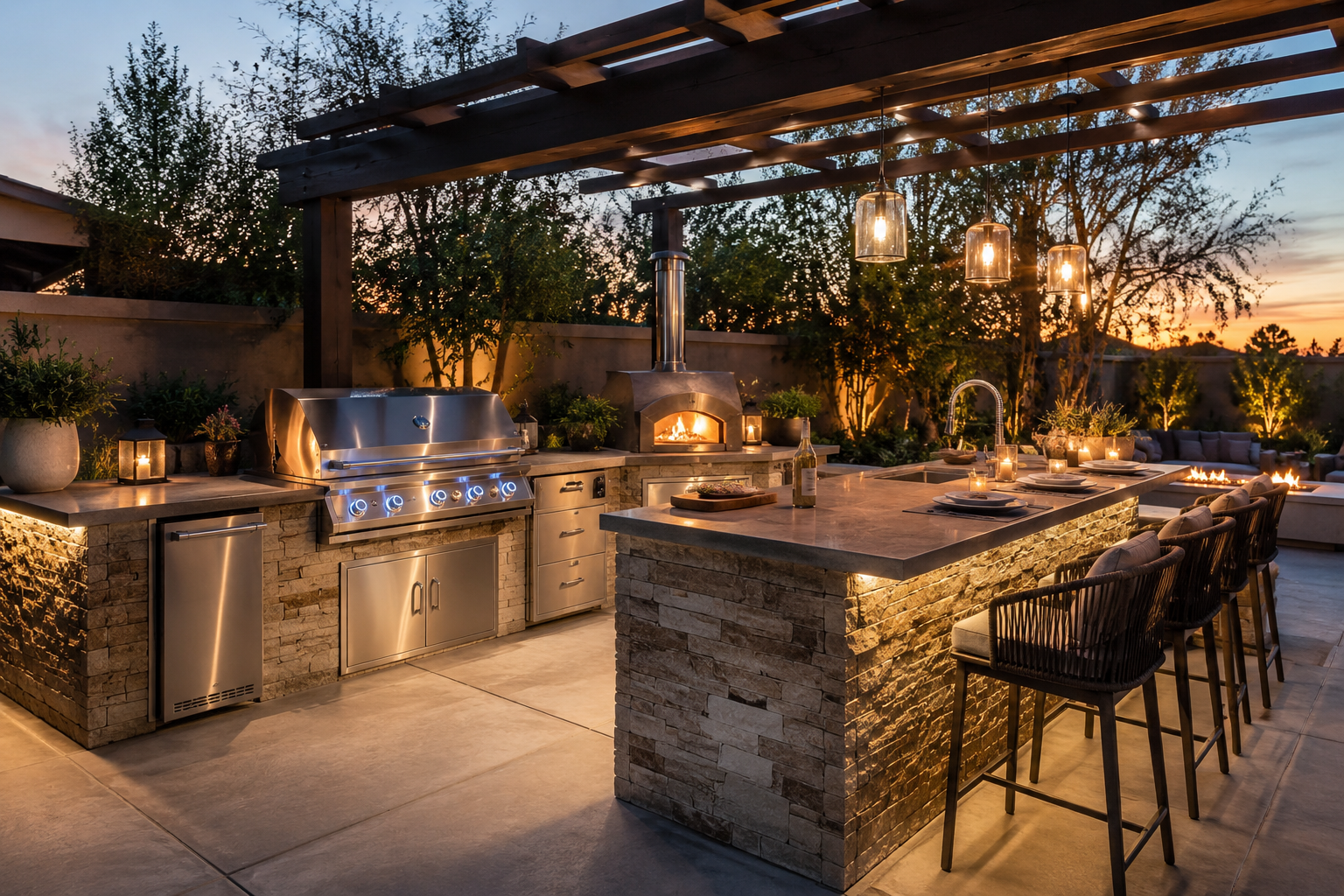
How Much does Landscaping cost in San Diego
Planning Your Outdoor Investment with Confidence
One of the first questions nearly every homeowner asks when considering a landscape project is, "How much is this going to cost?"
It's an understandable question, but it's also one of the most difficult to answer without understanding the property, the homeowner's goals, and the many factors that influence a successful landscape project.
Unlike purchasing a product with a fixed price, landscaping is highly customized. Every home has different site conditions, architectural styles, drainage requirements, soil conditions, accessibility challenges, material preferences, and lifestyle goals. Even two neighboring properties with similar square footage can have dramatically different project costs based on these variables.
At Nature's Elements Landscaping, we believe homeowners deserve honest information—not unrealistic price promises designed to generate phone calls. Rather than advertising misleading "starting at" prices, we prefer to educate homeowners about what actually influences landscaping costs so they can make informed decisions and confidently plan their investment.
Whether you're considering a simple landscape refresh, a complete backyard transformation, new outdoor living spaces, or an entirely redesigned property, this guide explains the factors that influence cost, where your investment goes, and how thoughtful planning can help you maximize every dollar you spend.
Our goal isn't simply to build beautiful landscapes.
Our goal is to help you make smart decisions that improve your property, protect your investment, and create outdoor spaces your family will enjoy for many years to come.
What Determines the Cost of Landscaping?
There isn't a universal price for landscaping because no two properties—or homeowners—are exactly alike.
A landscape project is made up of hundreds of individual decisions. Some projects require extensive demolition before construction can begin, while others simply need thoughtful improvements to an existing landscape. Some homeowners prioritize entertaining with an outdoor kitchen and fire feature, while others want a low-maintenance landscape designed to conserve water.
Understanding these variables will help you see why professional estimates are customized rather than based on a simple price per square foot.
Property Size and Existing Site Conditions
The overall size of your property certainly affects the cost of a project, but it is only one factor.
Before construction begins, we evaluate existing conditions such as slopes, grading, drainage, existing structures, irrigation systems, accessibility, utilities, mature trees, soil conditions, and any features that may require protection or removal.
Properties requiring significant preparation often involve additional labor, equipment, and materials before the new landscape can even begin.
Project Goals and Scope
One of the biggest factors affecting cost is simply what you're trying to accomplish.
Some homeowners are looking for a cosmetic refresh with new plants, mulch, decorative rock, and irrigation improvements.
Others want to completely transform how they use their outdoor space by adding patios, retaining walls, outdoor kitchens, pergolas, landscape lighting, fire features, drainage improvements, artificial turf, or complete landscape renovations.
The broader the vision, the more planning, coordination, and construction are typically involved.
Material Selections
Material choices have a significant impact on both appearance and investment.
For example, a concrete patio, natural stone patio, porcelain tile installation, and premium paver system each require different installation methods, material costs, labor, and maintenance considerations.
The same applies to fencing materials, retaining wall systems, lighting fixtures, irrigation components, outdoor kitchens, and planting selections.
Rather than recommending the most expensive materials, we help homeowners select products that best align with their goals, lifestyle, maintenance preferences, and long-term value.
Irrigation, Drainage, and Infrastructure
Many of the most important parts of a landscape are hidden underground.
Proper drainage, irrigation systems, electrical conduit for lighting, sleeves beneath hardscape, utility coordination, grading, and soil preparation all contribute to the long-term performance of a landscape.
Although these improvements may not always be immediately visible, they often have the greatest impact on protecting your investment and preventing expensive repairs in the future.
Accessibility and Construction Challenges
Every property presents unique construction conditions.
Limited access, narrow side yards, steep slopes, existing structures, overhead utilities, neighboring properties, and restricted equipment access can all influence labor requirements and project timelines.
These conditions don't necessarily prevent a project—they simply require thoughtful planning and the appropriate construction methods.
Permits and Engineering
Some landscape projects require permits or engineered plans depending on local building codes and the scope of work.
Examples may include structural retaining walls, large patio covers, electrical work, drainage systems, or other improvements requiring municipal approval.
When permits or engineering are necessary, we help guide homeowners through the process so projects are completed safely and in accordance with applicable regulations.
Design and Planning
One of the most valuable investments homeowners can make is beginning with a professional design.
A thoughtful design creates a clear vision, establishes priorities, identifies potential challenges before construction begins, and helps reduce costly changes during the project.
Instead of making decisions one feature at a time, homeowners can see how every element works together to create a functional, cohesive outdoor environment.
Learn more about our Landscape Design Process before beginning your project.
Understanding Landscape Investment Ranges
Every homeowner has different goals, priorities, and budgets.
Rather than thinking about landscaping as having one fixed cost, it's often more helpful to think about projects in terms of overall scope and complexity.
Some projects focus on refreshing an existing landscape, while others involve completely reimagining how an outdoor space functions. The investment naturally increases as additional construction, infrastructure, specialty materials, and outdoor living features are incorporated into the design.
The following examples illustrate the different types of landscape projects homeowners commonly undertake and how project scope can influence the overall investment.
Landscape Refresh
A landscape refresh is ideal for homeowners who are generally happy with the overall layout of their property but want to improve its appearance, functionality, or health.
These projects typically focus on enhancing existing landscape features rather than completely rebuilding the property. A refresh can dramatically improve curb appeal, reduce maintenance, conserve water, and give an older landscape new life without the investment of a full renovation.
A landscape refresh may include:
New plants and shrubs
Decorative mulch or rock
Irrigation upgrades
Drip irrigation conversions
Landscape lighting improvements
Lawn replacement or sod installation
Seasonal color
Minor drainage improvements
Tree and shrub pruning
Decorative boulders
Garden bed renovations
Replacement of aging landscape materials
For many homeowners, these improvements provide an excellent balance between investment and visual impact while extending the life of an existing landscape.
Partial Landscape Renovation
A partial landscape renovation involves replacing or improving significant portions of an existing landscape while leaving other areas intact.
Many homeowners choose this approach when certain parts of the property no longer meet their needs or when they prefer to improve the landscape in carefully planned phases.
Projects at this level often combine multiple trades and construction disciplines, requiring greater coordination between demolition, grading, irrigation, hardscape, planting, lighting, and finishing details.
A partial renovation may include:
New concrete patios or walkways
Decorative paver installations
Artificial turf
Retaining walls
Drainage improvements
New irrigation systems
Landscape lighting
Expanded planting areas
Privacy screening
Decorative fencing
Garden walls
Outdoor seating areas
Beginning with a comprehensive master plan allows many homeowners to complete these improvements over time while maintaining a cohesive design throughout the property.
Learn how proper planning can simplify future construction by visiting our Landscape Design Process.
Complete Outdoor Living Transformation
A complete landscape transformation reimagines how an entire property looks, functions, and feels.
Rather than simply replacing landscape materials, these projects are designed around how homeowners want to live outdoors. Families often use these opportunities to create spaces for entertaining, relaxing, dining, cooking, spending time together, and increasing the overall enjoyment of their home.
These projects frequently involve multiple construction phases and extensive planning to ensure every feature works together as one cohesive outdoor environment.
Complete landscape transformations may include:
Complete landscape design
Demolition and site preparation
Grading and drainage improvements
New irrigation systems
Decorative concrete
Premium pavers
Natural stone
Retaining walls
Outdoor kitchens
Fire pits and fireplaces
Pergolas and patio covers
Landscape lighting
Water features
Artificial turf
Premium planting
Mature specimen trees
Decorative fencing and gates
Seating walls
Outdoor entertainment areas
These comprehensive projects create lasting improvements that enhance property value, increase usable outdoor living space, improve functionality, and provide years of enjoyment for homeowners and their families.
Where Does Your Landscaping Investment Go?
One of the biggest misconceptions about landscaping is that most of the investment goes toward plants, concrete, or other visible materials.
In reality, a professionally constructed landscape represents hundreds of hours of planning, coordination, craftsmanship, specialized equipment, quality materials, and behind-the-scenes work that many homeowners never see.
Every successful project begins long before construction starts and continues well after the final cleanup. The goal isn't simply to install landscape products—it's to create an outdoor environment that performs well, looks beautiful, and provides lasting value for years to come.
Your landscape investment may include:
Professional Planning and Design
Every successful project begins with careful planning. Site evaluations, measurements, design development, material selection, budgeting, scheduling, and construction planning help ensure the finished project reflects your goals while minimizing unexpected challenges during construction.
Demolition and Site Preparation
Before new improvements can begin, existing landscape features often need to be removed. This may include concrete, old irrigation systems, lawns, planting, fencing, or outdated hardscape. Proper preparation creates the foundation for everything that follows.
Grading and Drainage
One of the most important—and often overlooked—aspects of landscape construction is managing water properly.
Correct grading, drainage systems, catch basins, French drains, swales, and soil preparation help protect your home, reduce erosion, improve plant health, and extend the life of your landscape.
Learn more about protecting your property through proper drainage with The Leak Squad.
Irrigation Infrastructure
Efficient irrigation is essential for maintaining healthy landscapes while conserving water.
Modern irrigation systems may include smart controllers, pressure-regulated sprinkler heads, drip irrigation, moisture management strategies, valves, wiring, sleeves beneath hardscape, and water-efficient technologies designed specifically for Southern California landscapes.
Well-designed irrigation systems not only improve plant health but also reduce water waste and long-term maintenance costs.
Materials and Construction
The quality of the finished landscape depends heavily on the materials selected and the craftsmanship used during installation.
Whether your project includes concrete, pavers, natural stone, retaining walls, fencing, landscape lighting, irrigation, planting, artificial turf, or outdoor living features, every material has its own installation requirements and expected lifespan.
Choosing quality products that are appropriate for your property often results in lower maintenance, improved durability, and greater long-term value.
Our goal is to recommend materials that balance appearance, performance, maintenance requirements, and your overall budget—not simply the most expensive option available.
Skilled Craftsmanship
A successful landscape is built by experienced professionals who understand far more than installation techniques.
Every project requires careful layout, grading, drainage, irrigation, construction sequencing, problem-solving, attention to detail, and quality workmanship throughout every phase of construction.
Professional craftsmanship helps ensure your landscape not only looks beautiful when completed but continues to perform properly for many years.
Specialized Equipment
Different landscape projects require different tools and equipment.
Excavators, skid steers, compactors, concrete equipment, laser levels, trenchers, grading equipment, masonry tools, irrigation testing equipment, and specialty installation tools all contribute to building a landscape efficiently and accurately.
Using the proper equipment often improves construction quality while reducing unnecessary delays.
Project Management and Coordination
Landscape construction involves much more than performing physical labor.
Successful projects require scheduling deliveries, coordinating subcontractors when necessary, ordering materials, verifying measurements, communicating with homeowners, monitoring progress, solving unexpected field conditions, and maintaining quality standards from beginning to end.
Careful project management helps minimize disruptions while keeping construction organized and efficient.
Permits, Engineering, and Code Compliance
Certain landscape improvements require permits, engineered plans, inspections, or compliance with local building regulations.
When applicable, these requirements become an important part of the overall project and help ensure improvements are constructed safely and according to current standards.
Our team works closely with homeowners throughout this process to help make these requirements as straightforward as possible.
Cleanup and Final Detailing
The final stage of every project is just as important as the first.
Construction debris is removed, finished surfaces are cleaned, irrigation systems are tested, lighting is adjusted, plants are inspected, and the landscape receives its final detailing before project completion.
Attention to these finishing details helps ensure your outdoor space is ready to enjoy from the day construction is complete.
Frequently Asked Questions About Landscaping Costs
Homeowners often have many of the same questions when planning a landscape project. Below are some of the most common questions we receive.
How much does landscaping cost in San Diego?
Every landscape project is unique. The final investment depends on property size, existing site conditions, design goals, material selections, drainage, irrigation, accessibility, permits, and the overall scope of work.
Rather than relying on generic price ranges found online, we recommend scheduling a consultation so your project can be evaluated based on your property's specific needs.
Is landscaping worth the investment?
A professionally designed and constructed landscape can improve curb appeal, increase usable outdoor living space, enhance everyday enjoyment, support water conservation, and contribute to long-term property value.
Many homeowners also find that investing in their outdoor spaces significantly increases the amount of time they spend outside with family and friends.
Can my landscaping project be completed in phases?
Absolutely.
Many homeowners choose to complete larger projects over multiple phases while following one comprehensive master plan.
This approach allows improvements to be completed over time without sacrificing the overall vision or requiring previously completed work to be removed later.
How to Get the Most Value from Your Landscape Budget
Creating an exceptional landscape isn't about spending the most money—it's about making informed decisions that deliver lasting value.
Thoughtful planning allows homeowners to prioritize improvements, avoid unnecessary expenses, and invest in features that will provide the greatest long-term benefit.
The following recommendations can help maximize your landscape investment.
Start with a Master Plan
Even if you intend to complete your project in phases, beginning with a comprehensive landscape design provides a roadmap for the future.
A master plan helps ensure every improvement works together while reducing the likelihood of costly redesigns or reconstruction later.
Learn more about our Landscape Design Process and how thoughtful planning can simplify every stage of construction.
Prioritize Infrastructure First
Beautiful finishes are important, but the systems beneath them are often what determine how well your landscape performs over time.
Proper drainage, irrigation, grading, soil preparation, sleeves for future utilities, and electrical infrastructure should be addressed before decorative finishes are installed.
Strong infrastructure protects your investment and helps prevent expensive repairs in the future.
Invest in Quality Materials
Selecting materials based solely on the lowest initial price can sometimes result in higher maintenance costs or premature replacement.
Choosing products that match your property's needs, climate, and intended use often provides greater value over the life of the landscape.
Design for Your Lifestyle
Every homeowner uses their outdoor space differently.
Some prioritize entertaining. Others want a low-maintenance landscape, a safe place for children to play, water conservation, outdoor cooking, gardening, or relaxing with family.
Designing around how you actually live ensures your investment provides lasting enjoyment rather than simply adding features that may go unused.
Think Long-Term
The most successful landscapes are designed with the future in mind.
Planning for mature plant growth, efficient irrigation, durable materials, future outdoor living additions, and ongoing maintenance helps create landscapes that continue to improve over time instead of requiring frequent renovations.
Work with Experienced Professionals
Landscape projects combine design, horticulture, irrigation, drainage, masonry, concrete, carpentry, lighting, grading, and construction management into one cohesive project.
Working with experienced professionals helps identify potential challenges early, improve project efficiency, and create an outdoor environment that is both beautiful and built to last.
Our philosophy has always been simple:
We don't just build landscapes.
We create outdoor environments where families gather, entertain, relax, and make memories for years to come.
Is professional landscape design worth the investment?
In most cases, yes.
A professional landscape design provides a clear roadmap before construction begins. It helps homeowners visualize the finished project, establish realistic budgets, coordinate construction phases, and identify potential challenges before they become costly changes during construction.
Whether you're planning a simple landscape refresh or a complete outdoor living transformation, beginning with a comprehensive design often saves both time and money while creating a more cohesive finished landscape.
Learn more about our Landscape Design Process.
How long does a landscaping project take?
Every project is different.
The construction timeline depends on factors such as project size, material availability, permitting requirements, weather conditions, site accessibility, and the overall complexity of the work.
Smaller landscape improvements may be completed in a matter of days, while larger outdoor living projects involving multiple construction phases may take several weeks or longer.
During the planning process, we'll discuss the anticipated schedule and keep you informed throughout every phase of construction.
Can existing plants be incorporated into a new landscape?
Often, yes.
Healthy trees, shrubs, and other desirable plants can frequently be preserved and incorporated into a new landscape design when they complement the overall vision for the property.
Whenever practical, we evaluate existing landscape features to determine whether they should be preserved, relocated, enhanced, or replaced as part of the project.
Do I need permits for my landscape project?
Not every landscape improvement requires permits.
However, certain projects—such as structural retaining walls, patio covers, electrical installations, drainage improvements, or other construction features—may require permits, engineering, or inspections depending on local building requirements.
If permits are necessary, we'll help guide you through the process and explain what to expect before construction begins.
What is the best time of year to begin a landscaping project?
Landscape construction can take place throughout much of the year in San Diego.
The ideal timing depends on your project's goals, plant selection, weather conditions, material availability, and scheduling preferences.
Planning ahead often provides the greatest flexibility and allows sufficient time for design, permitting (when required), and material coordination before construction begins.
Why Homeowners Choose Nature's Elements Landscaping
Choosing a landscape contractor isn't simply about comparing prices.
You're selecting a team that will help shape how you experience your home for years to come.
At Nature's Elements Landscaping, we believe every landscape should be thoughtfully designed around the people who will use it—not simply around products or construction materials.
That philosophy influences every recommendation we make.
Before discussing concrete, plants, irrigation, lighting, or outdoor living features, we first want to understand how you envision using your outdoor space.
Do you enjoy entertaining?
Do you want a quiet place to relax after work?
Is your goal to create a safer environment for children and pets?
Would you like to reduce maintenance, conserve water, increase privacy, or improve your home's curb appeal?
The answers to these questions shape every successful landscape.
Rather than selling individual products, we create outdoor environments that are functional, sustainable, beautiful, and built around your lifestyle.
This philosophy has guided our company since the beginning.
We Design for the Human Experience.
Because the most successful landscapes aren't measured by the number of pavers installed or the size of an outdoor kitchen.
They're measured by birthday parties held on the patio...
Quiet mornings enjoyed with a cup of coffee...
Family dinners shared outdoors...
Children playing on the lawn...
Friends gathering around a fire pit...
And countless memories created in spaces designed specifically for the people who call them home.
That is what great landscaping is truly about.
That is why we build.
That is why we continue striving to create outdoor environments that families will enjoy for decades.
Continue Planning Your Project
Every successful landscape begins with informed decisions.
Whether you're just beginning to explore ideas or preparing to move forward with construction, the following resources can help you better understand the design process, compare options, and plan your investment with confidence.
Explore Related Resources
Landscape Design Process
Landscape Design Tips And Styles
Hardscape & Concrete Contractor
Retaining Walls Contractor
Key Stone Wall Systems
Outdoor Kitchen And Fire Features Contractor
Decks And Pergolas Contractor
Fencing Contractor
Landscape Lighting
The Leak Squad
Landscape Maintenance
Zone 0 Landscaping
Areas We Service
Each of these resources explores a different aspect of landscape design, construction, maintenance, or water management, helping you make informed decisions before your project begins.
Ready to Start Planning Your Landscape?
Whether you're considering a simple landscape refresh or a complete outdoor living transformation, we're here to help you navigate the process with honest guidance, thoughtful planning, and professional craftsmanship.
Every property is unique, and every homeowner has different goals. We'll take the time to understand your vision, evaluate your property, discuss your priorities, and develop recommendations tailored specifically to your home and lifestyle.
If you're ready to begin creating an outdoor space that's beautiful, functional, and built to last, we invite you to take the next step.
Visit Get A Quote to schedule your consultation and begin planning your landscape with Nature's Elements Landscaping.
We look forward to helping you build an outdoor environment where your family can gather, relax, entertain, and create lasting memories for years to come.